
Cardiovascular Disease & Stroke Prevention with a Physiotherapist
29/09/2026
Hello reader,
We have taken a longer than expected hiatus from the blog, however, we’re back on track and motivated to keep bringing you helpful information for your healthy, every month.
On the 8th of September, we celebrated World Physiotherapy Day! The topic this year was the role of physiotherapy and physical activity in the prevention, management and rehabilitation of cardiovascular diseases (CVD) and stroke. This would be quite a large subject to cover in one blog, so I felt it would be most valuable today, to focus on the prevention of CVD and stroke.
Firstly a few facts:
- CVDs are the number one cause of death globally, 85% of which are heart attacks or strokes
- 1 in 4 people will have a stroke in their lifetime, almost all of which are preventable
- 30 minutes of exercise, 5 times a week, reduces your risk of stroke by 25%
- Undertaking sufficient exercise on a weekly basis, reduces your risk of all forms of disease, including cancer, diabetes and chronic lung conditions
Physiotherapists are in an ideal position to help you prevent the development of CVDs. Firstly, we are trained to identify warning signs. A physiotherapist will assess you for risk factors in 2 areas; your health history and lifestyle aspects.
You may already know that high blood pressure, high cholesterol, being overweight or obese, and a family history of CVDs, increases the risk of heart disease and stroke. However, were you aware that raised blood sugars, as is the case in diabetes, increases risks? Or, a change in hormone profile, specifically post menopause, raises the risk of heart disease.
There are numerous lifestyle factors that contribute to the risk of developing CVDs. We acknowledge that some of these factors may feel difficult to discuss, with a health professional. The primary area, we as physiotherapists can assess and help you with is, the level of your physical activity and exercise. It is well established that a more sedentary lifestyle, be that with your work, commuting or how we spend our free-time, contributes significantly to whether you will develop a CVD. Therefore, we often ask you quite a bit about your typical routines regarding activity.
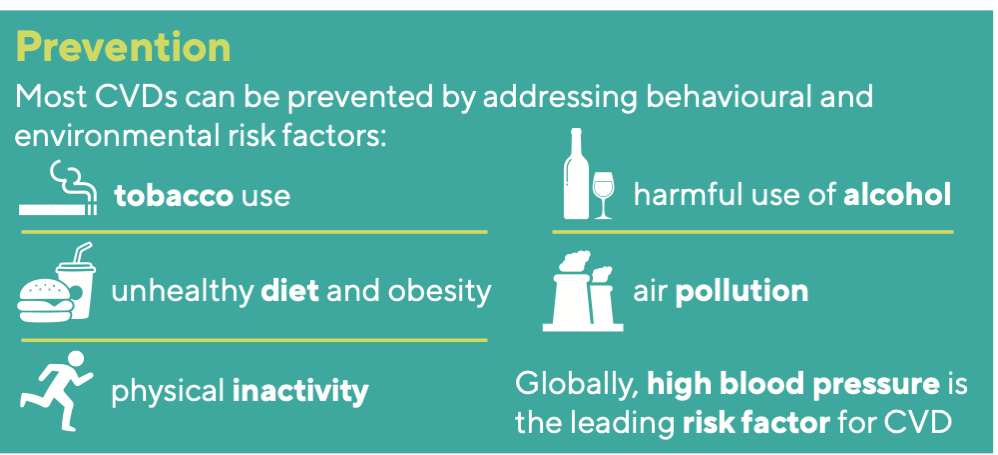
Smoking/tobacco use, the composition of your diet and alcohol use, are the 3 other factors you could discuss in your next appointment with a health professional, to help them understand how to reduce your risk of CVD.
The next step with your physiotherapist will be aimed at creating an individualised activity plan. Guidelines on the minimum levels of weekly activity are outlined in the graphic below.
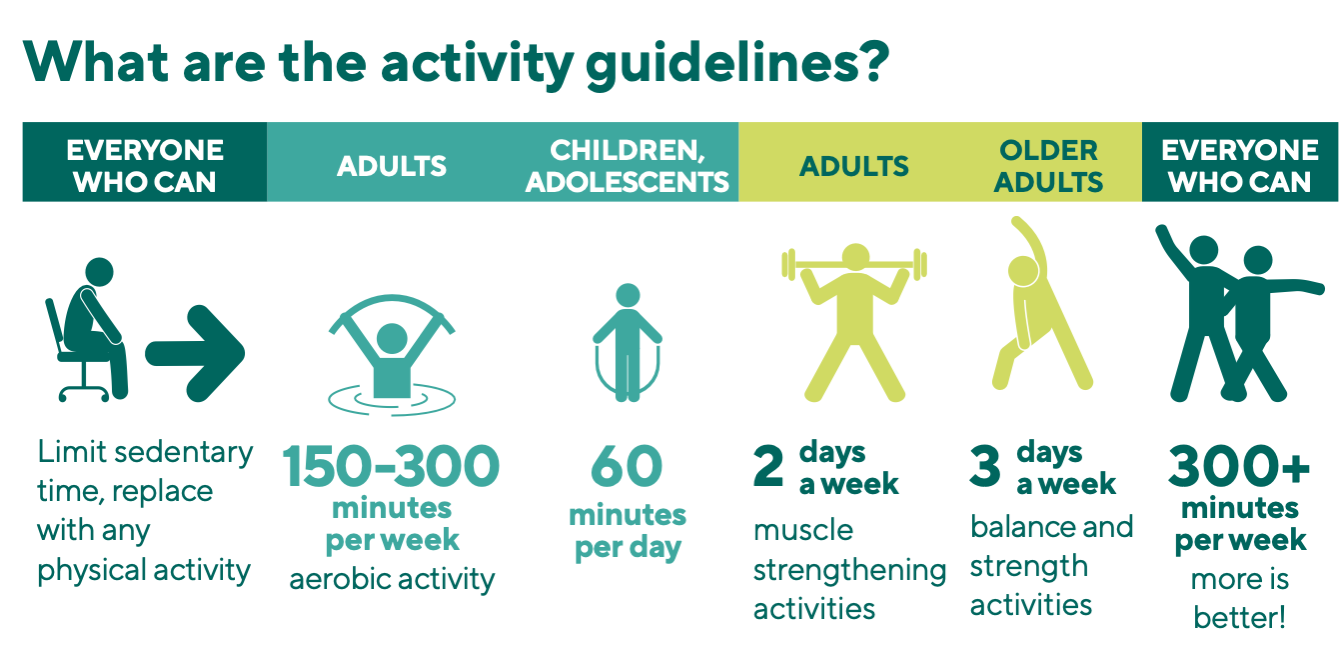
I emphasise “individualised”, as it is the key to success! There are a couple of parts to developing a plan bespoke to your needs. Firstly, what is your starting point? The physiotherapist will have already discussed your current levels of activity. If we imagine that the aerobic activity for somebody is approximately 60 minutes per week, then we will see that suddenly increasing that to150-300 minutes, would likely be too much. It would be a 250-500% increase. This level of change, whether it is walking, swimming, cycling etc., may be achievable in the short-term, but typically is not sustainable. There is a risk of fatigue, injury, feeling overwhelmed by the demands, to name but a few barriers to long-term success. Therefore, we might consider adding 15 minutes of additional aerobic activity every 1-2 weeks. This would be a 25% increase initially, and allow the body and the person’s schedule to adapt gradually, which is naturally more sustainable. We can apply the same approach to the person who is not undertaking any muscle strengthening or balance activity.
Fundamental to creating a personalised plan that will work, is understanding the types of activity you enjoy and the barriers that would limit your participation. The research shows that having a positive view of the activity and less logistics to deal with, supports a successful outcome. As a result, we often discuss these topics with people. I regularly have a conversation with someone who wishes to start strength training. We look at how many times a week and for how long each session is feasible for them. I ask them about whether they wish to go to a gym, and if so, would they have sufficient time. If not, we explore whether they could invest in some equipment, with some advice on the cost and time benefits of this approach. This conversation helps to land on the plan that is most likely to work for you.
To finish, it is important to state that there are many other factors which can influence the success of a plan. A key component of the process is to review the plan with your physiotherapist, after an agreed time frame. You have the opportunity to provide feedback, which the physiotherapist can act on with you to evolve the plan.
Till the next blog, stay active and stay well!
Lonan Hughes
Chartered Physiotherapist